

Rating of
3/4
“Better to be king for a night..."
Matthew Brady - wrote on 11/08/26
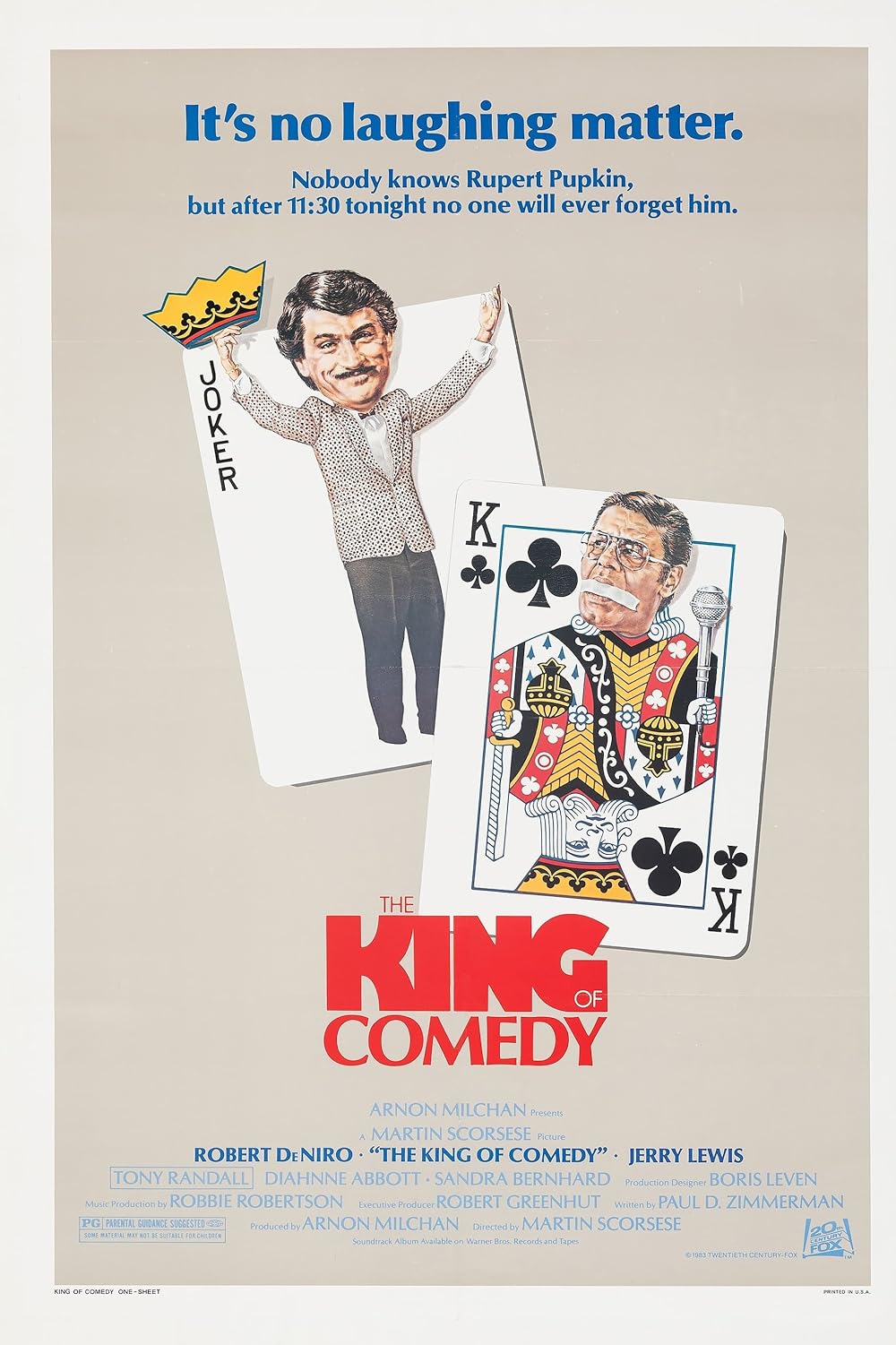
The King of Comedy is another great, underrated movie in Scorsese's filmography. Martin Scorsese has many fantastic films, and people have their own favorites that get talked about a lot. While I wouldn't say King of Comedy is in the top 5 or 10, it's still solid, and I think it deserves more attention. I know Joker (2019), the Oscar-winning, 1 billion box office hit, took a lot of notes from this movie, so much so that many aren't aware of, or don't realize, where the original inspiration came from. Still, this movie feels underappreciated in its own right.
A fascinating yet unpleasant watch as we follow Rupert Pupkin (Robert De Niro), a borderline psycho who wants to be a comedian and get his big break. He acts as if the celebrities he admires are his real-life friends who know him. His happy, spirited demeanor makes him immune to social awkwardness or rejection; unfortunately, we're not, so watching is painful. As expected, De Niro is excellent. Watching his best performances reminds me why he’s one of the best. Just don’t watch his recent work.
Jerry Lewis is also superb as the late-night talk show host Jerry Langford, whom Pupkin obsesses over. Lewis is best known for his slapstick clown comedy, so this is a departure from type. It is a restrained, serious performance that you take seriously. I imagine that playing this character captured what Lewis may have felt in the spotlight at the height of fame: the suffocating pressure of celebrity, reflected in his performance as fatigue and discomfort in public.
Another standout performance is Sandra Bernhard as Masha, Pupkin's partner in crime, who is unhinged and dangerously obsessive, even more so than he is. In fact, Rupert Pupkin looks more sane than she does. She's an erratic woman, her emotions a frantic, terrifying rage. But beneath all that chaos, she desperately wants only love and intimacy. The interesting thing is that she's wealthy and has a massive, multi-story Manhattan townhouse all to herself, yet it only makes her lonelier in this big, empty house. She isn't an obsessed fan because she likes celebrities and the idea of fame; in fact, she doesn't want the spotlight on her, but because she generally feels a special, deeply spiritual connection to the person she watched on TV, Jerry Langford.
What stands out in this film is how relevant the point is: the thirst for fame, the desire to be seen, and what people will do to achieve it, especially as Internet culture continues to rise and exert influence. The clout and main-character syndrome you see almost every day feel almost like one-night fame; you never hear from them again. So the line, “Better to be king for a night than a schmuck for a lifetime,” still captures Internet culture perfectly.
The King of Comedy feels like a spiritual follow-up to Taxi Driver in some respects. Both films follow lonely, unwell men who are detached from reality, set against a backdrop of urban alienation. Both are uncomfortable to watch because their pursuits are delusional. Travis Bickle in Taxi Driver believes he is a righteous vigilante who can cleanse the streets of scum. Meanwhile, Rupert Pupkin believes he's already an elite comedian who can easily get his big break if given a chance.
While watching The King of Comedy, I expected a violent or disturbing outcome, like a bomb about to go off, similar to Taxi Driver. Without giving away what happens, it goes in a different direction. When it ended, I said to myself, "Oh, is that it?” But on further reflection, I came to see the ending as satisfying because it had been building toward it. As I said two paragraphs ago, its relevance to our times makes it more plausible. Everyone wants to be the star of the show, even if only for one night.

